
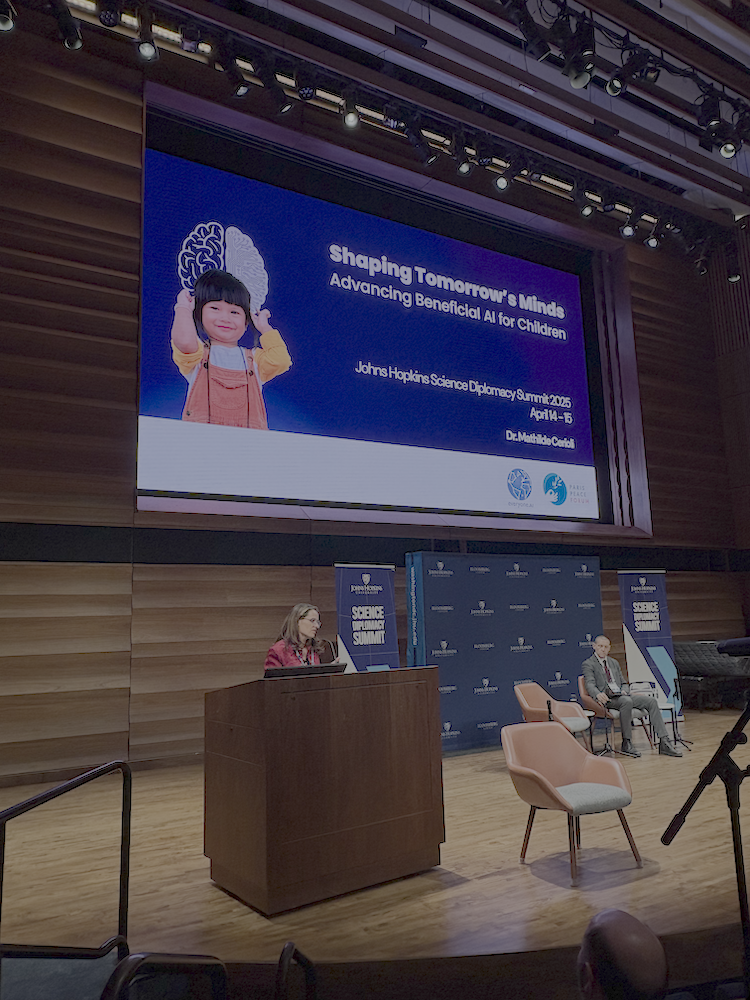
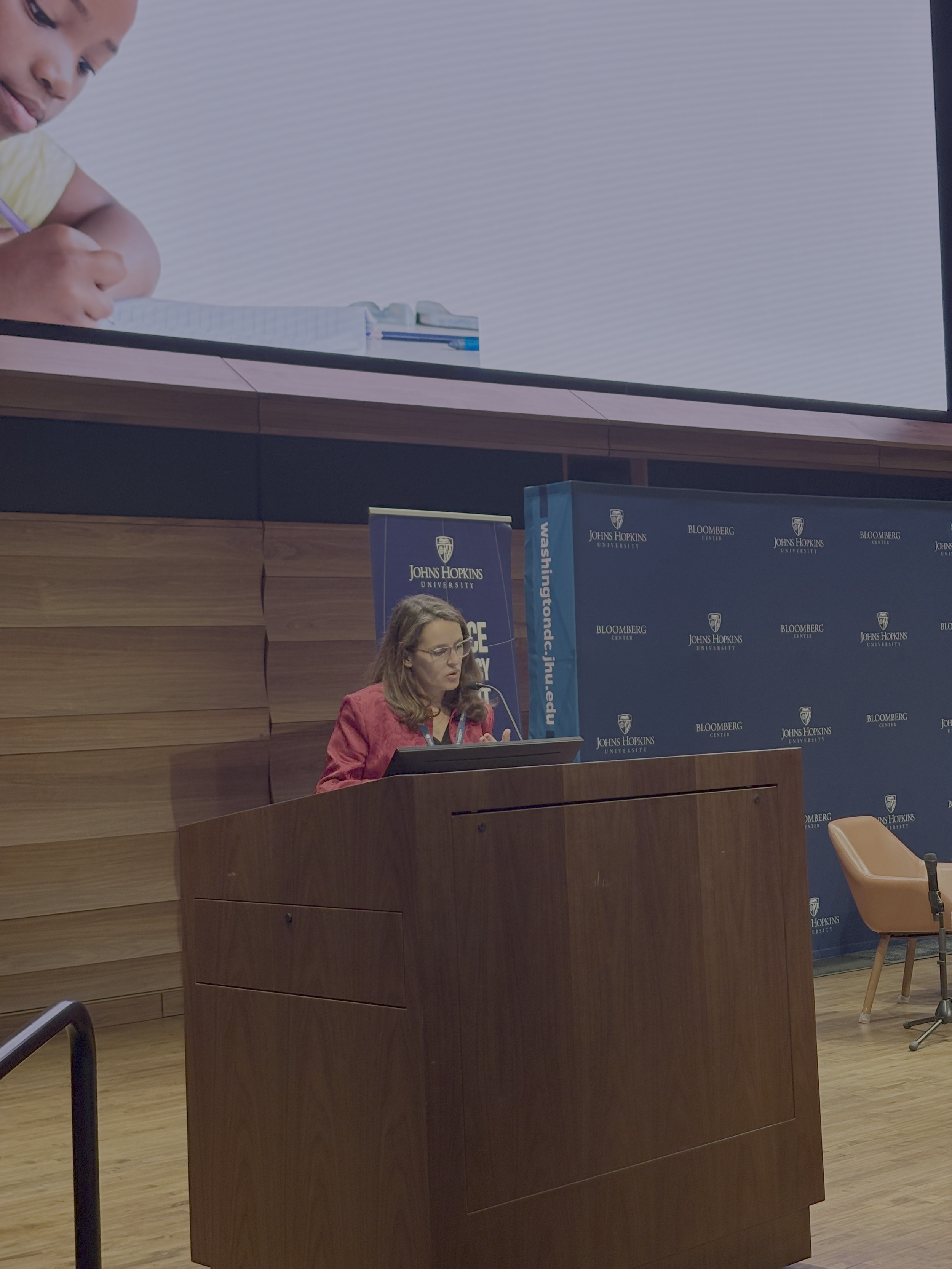
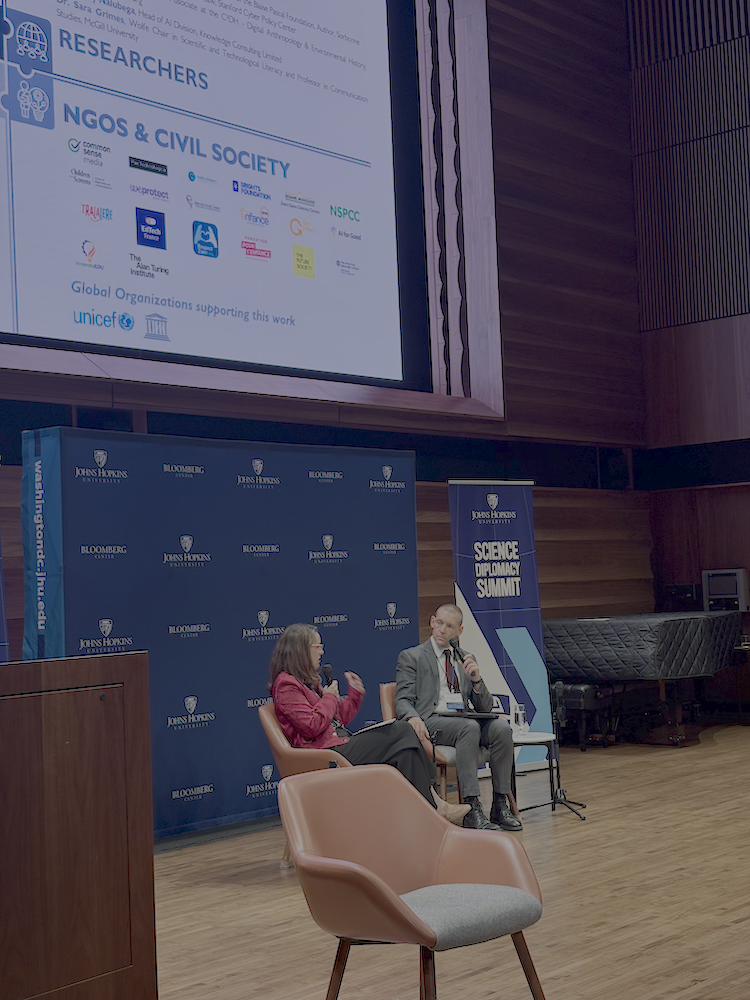
At the Science Diplomacy Summit in Washington, DC, I spoke about why children must be treated as a central concern in AI discussions, not as an afterthought. In a fireside chat moderated by Philippe Ribière, we examined how developmental science can help move AI debates beyond polarized narratives and toward more precise, age-aware thinking.
The discussion focused on a simple premise: children are not just smaller users. Their cognitive, emotional, and social development makes them uniquely sensitive to how AI systems are designed and experienced. When adult decisions prioritize short-term engagement or abstract principles without grounding them in developmental evidence, we not only create risks but also miss opportunities to design AI experiences that genuinely support learning, agency, and wellbeing.
I outlined how science-driven design can help identify both the potential and the limits of AI for young users, and why adult responsibility is the key lever. The question is not whether AI will be part of children’s lives, but whether we choose to shape those experiences in ways that align with how children actually grow and learn.
This talk is aimed at audiences interested in bridging research, policy, and practice, and in understanding what it takes to translate developmental evidence into meaningful decisions in the age of AI.
